Q: How long does it take to see the cell death occurring from the use of targeted toxins using saporin? Is there a time course of hours or days?
A: The figure below illustrates the time course of cell death very effectively. Internalization and cytotoxicity of SP-SAP in primary cultures of neonatal spinal cord neurons. Confocal image of neurons where the Substance P receptor; NK1R (SPR) immunofluorescence (A, C, D) appears red, areas of concentrated SPR immunofluorescence appear yellow. (A, C, and D) SPR immunofluorescence in neurons 2 hours, 1 day, and 4 days, respectively, after treatment with SP-SAP. (B) Confocal image showing SAP immunofluorescence (yellow) 2 hours after SP-SAP treatment.
These images were projected from 14 optical sections acquired at 0.8-mm intervals with a 603 lens. Bar, 25 mm.
It is recommended that you wait for two weeks to allow for all debris to be cleared and the animal to regain normal eating and sleeping habits.
Q: We have a publication in review and put this statement in the paper, “The mouse monoclonal antibody to the low affinity nerve growth factor receptor (p75NTR; Advanced Targeting Systems) was derived from immunization of mice with WM245 melanoma cells and recognizes p75NTR in human, primate, rabbit, sheep, dog, cat, and pig. According to the manufacturer’s information, the antibody was tested by flow cytometry.” One of the reviewers wants to know more about the flow cytometry used to characterize this antibody (Cat. #AB-N07). Can you help, please?
A: This antibody is routinely tested by flow cytometry. The quality control flow data can be found on the data sheet on our website. HS294T cells, human metastatic melanoma cells, were used in flow cytometry with Anti-p75NTR (ME20.4, Cat. #AB-N07). Cells were treated with 4 µg of AB-N07 and subsequently with Anti-murine IgG-FITC (Cat. #FL-07). This assay shows the binding affinity of AB-N07 to cells known to express p75NTR.
Q: Some suppliers sell their streptavidin conjugates in amounts given as streptavidin equivalents. Is that also the case for your product, Streptavidin-ZAP? What is important to me is to know what the molar concentration of streptavidin conjugate is, and the volume of your preparation.
A: The molar concentration of Streptavidin-ZAP (Cat. #IT-27) will depend on the lot; the accompanying data sheet will contain the molecular weight. We recommend that you mix Streptavidin-ZAP and your biotinylated material at equimolar concentrations. For our in-house in vitro quality control assays, we make a stock vial containing both 1 mM of biotinylated material and 1 mM of Streptavidin-ZAP diluted in media in 150 ml total volume. From this stock vial, we add 10 ml to each well of a plate containing cells in 90 µl volumes, which then dilutes the stock material to its correct concentration of 100 nM.
Q: So, each mole of streptavidin will bind 4 moles of biotin?
A: Streptavidin-ZAP was created for use as an initial diagnostic step with biotinylated targeting agents, before moving on to a direct linkage between the optimal targeting agent and Saporin. The biotin-streptavidin interaction should be considered a linker; the major players are the targeting agent and Saporin. The targeting agent to Saporin ratio is kept at 1:2 M. When pre-mixing the biotinylated moiety with Streptavidin-ZAP in an equimolar ratio the ability of Streptavidin-ZAP to bind up to 4 biotins ensures that most of the biotinylated moiety will have Streptavidin-ZAP attached (no free biotinylated moiety). Streptavidin equivalents would not be appropriate as the Saporin moiety in Streptavidin-ZAP is the primary focus of the technology.
Can you comment on the mechanism by which the SAP toxin is cleaved off from the antibody? Your website indicates that the cleavage occurs in the endosome. I just want to verify that it is not cleaved in the lysosome.
From what we have gathered, there is a great probability that something gets broken in the endosome. We know this from the peptide ligand toxins that bind to GPCRs. They would be rapidly returned to the cell surface through receptor recycling if there wasn’t some sort of cleavage. In the case of FGF-SAP (Cat. #IT-38) , e.g., we know that FGF is extensively degraded in the endosome through proteolytic degradation (Lappi et al, 1994). There is occasionally a disulfide linker between the toxin and antibody, but there is some controversy that this is cleaved: many say yes, some say no, mainly because the redox potential is not sufficient. This would ignore the presence of thiol reductase enzymes. The single chain antibody fusion protein-toxins are quite toxic. The linkage there is clearly through peptide bonds (they are fusion proteins) so the easiest response to this question is that there is proteolytic degradation. Since saporin is tremendously resistant to proteases, it can’t be stopped.
Lappi DA, Ying W, Barthelemy I, Martineau D, Prieto I, Benatti L, Soria M, Baird A (1994) Expression and activities of a recombinant basic fibroblast growth factor-saporin fusion protein. J Biol Chem 269(17):12552-12558. doi: PMID: 8175664
How can I target B-cells? Which secondary conjugate should I use?
ATS makes secondary conjugates that use your primary antibody to target cells for elimination. Just mix your primary antibody with a secondary antibody conjugated to the ribosome-inactivating protein, Saporin, to screen your antibodies. The cells targeted by your primary antibody are eliminated.
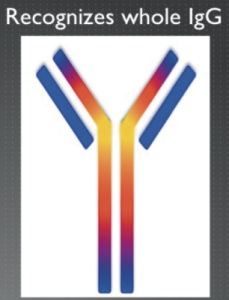
Recognizes whole IgG
Hum-ZAP (Cat. #IT-22) is made with a bivalent secondary antibody that recognizes whole IgG. B-Cells have endogenous IgGs.
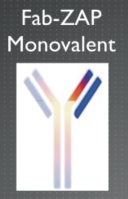
Fab-ZAP (Cat. #IT-51) is made with a monovalent secondary antibody that recognizes whole IgG. B-Cells have endogenous IgGs.
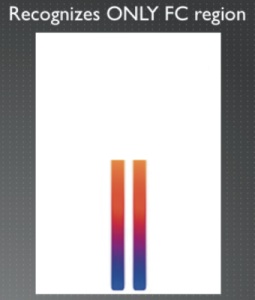
Recognizes Fc region
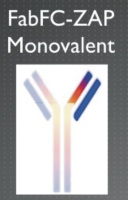
FabFc-ZAP (Cat. #IT-65) is made with a monovalent secondary antibody that recognizes ONLY the FC portion of IgG.
Q: Recently, I attended a talk where the speaker said that a targeted toxin was able to work when an antagonist did not. Can you explain how your technology is different?
A: Certainly. It is a very interesting question and one that helps explain the Targeting Technology quite well. An antagonist is used to block a receptor on a cell to keep it from binding a target molecule and activating the cell. For example, a substance P antagonist binds to the substance P (NK-1) receptor. The hypothesis was that if the antagonist binds to the receptor, substance P cannot bind and the cell will not be activated. The reality is that there are other receptors besides the substance P receptor on that cell. If any of these other receptors bind to their target molecules, then the cell will still be activated.
It sometimes is not enough to block one particular receptor. The ATS targeting technology (molecular surgery) can use any of these cell surface receptors to target and completely eliminate the cell. That way, there are no receptors left to bind; no cell left to be activated. Importantly, molecular surgery cleanly removes one particular cell type and does not damage bystander cells. Once the debris from the targeted cell is cleared away, there is nothing remaining to interfere or affect the normal action/interaction of other cells.
Q: What is the LD50 of saporin in mice? Do you have references for this?
A: Thank you for your question. It is very helpful to have this information to calculate the appropriate dose for systemic administration.
According to the work of Thorpe et al., saporin alone has an acute LD50, when delivered intravenously, of 6.8 mg/kg in mice. Histologic examination of kidneys from mice receiving near-lethal doses of saporin revealed necrosis of the convoluted tubules. Other major organs had only minor changes.
Once saporin is attached to an immunoglobulin, the LD50 drops dramatically to 1.0 mg/kg in systemic administration. Near-lethal doses of the conjugates, by contrast to saporin alone, inflicted major damage to the liver and spleen of the mice while the kidneys (and other organs) appeared normal under histologic examination.
Q: We will be using your chick-ZAP secondary conjugate (Cat. #IT-62) and noticed that in your protocol you mention not to use a reducing agent in your media. Our normal growth media contains beta mercaptoethanol at 100 μM. Will this be a problem?
A: Officially, we would recommend allowing the cells to acclimate to media that contains NO BMe, and then proceed with your experiments. However, some of our in-house experiments use cells that are cultured in media containing 50 μM BMe, and we have not seen that concentration affect the toxin’s effectiveness, but we have not tried a concentration as high as 100 μM.
Q: We are interested in having a custom conjugation of saporin and our antibody. Do you remove unconjugated antibody from the final material you send us?
A: We do remove the unconjugated antibody and saporin from the final product that we send to you. And perhaps to answer a question you may not be asking, but may be curious about, the unconjugated material is not particularly usable, after it has been removed from the final product as it has been slightly modified in preparation for the conjugation.