Kisspeptin (KP) and neurokinin B (NKB) are neuropeptides that govern the reproductive endocrine axis via regulating hypothalamic gonadotropin releasing hormone (GnRH) neuronal activity and secretion. GnRH is released from the hypothalamus to act on the anterior pituitary triggering the release of luteinizing hormone (LH), and follicle stimulating hormone (FSH). These gonadotropic hormones lead to sexual maturation and gametogenesis. Kisspeptins (kisspeptin-54; KP-54; metastin) are ligands to the G-protein coupled receptor GPR54 and have functions in the hypothalamus, placenta, liver, pancreas, adipose tissue, bone, and limbic regions which show their importance in the research for diagnosis and treatment of pregnancy, metabolic, liver, bone, and behavioral disorders.
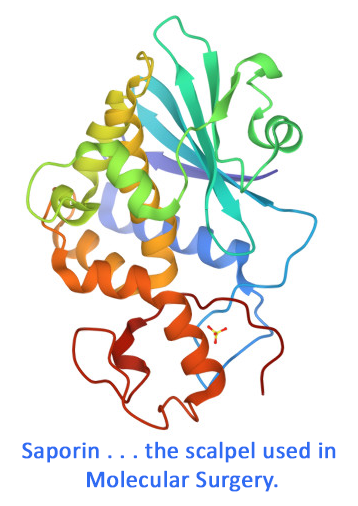
Kisspeptin-SAP is a direct conjugate between the 54-amino acid kisspeptin peptide and the ribosome-inactivating protein, saporin.
Kisspeptin-SAP eliminates cells expressing the human and sheep G-protein coupled receptor, GPR54. All other cells are left untouched.
Ogawa S, Nathan FM, Parhar IS (2014) Habenular kisspeptin modulates fear in the zebrafish. Proc Natl Acad Sci U S A 111(10):3841-3846. doi: 10.1073/pnas.1314184111 PMID: 24567386
Summary: The peptide kisspeptin can be found in several areas of the brain, but its role in regions other than the hypothalamus has not been studied. Zebrafish express kiss1 mRNA which is a conserved ortholog of the mammalian KISSI/KissI making zebrafish a viable model for investigating the role of kisspeptin in various brain systems. Animals received 1 μg of the custom conjugate kiss-SAP (see NK3-SAP, Cat. #IT-63) via an intracranial injection. Blank-SAP (Cat. #IT-21) was used as a control. Reducing Kiss1 immunoreactivity in the habenula and the raphe reduced an invoked fear response, indicating a role for kisspeptin in fear inhibition.
Goodman RL, Moore AM, Onslow K, Hileman SM, Hardy SL, Bowdridge EC, Walters BA, Agus S, Griesgraber MJ, Aerts EG, Lehman MN, Coolen LM (2023) Lesions of kndy and kiss1r neurons in the arcuate nucleus produce different effects on lh pulse patterns in female sheep. Endocrinology 164(11):bqad148. doi: 10.1210/endocr/bqad148 PMID: 37776515
Objective: To test the functional role of ovine KNDy neurons in pulse generation and identify the roles of nearby Kiss1 receptor (Kiss1R)-containing cells.
Summary: Injection of NK3-SAP (NKB-SAP) ablated over 90% of the KNDy cells, Kiss-SAP lesioned about two-thirds of the Kiss1R population. This led to a significant decrease in LH pulse amplitude and altering LH pulse patterns. NK3-SAP increased the interpulse interval without affecting the regularity of LH pulses, whereas Kiss-SAP disrupted their regular hourly occurrence but not the interpulse interval. The findings suggest that KNDy neurons are critical for GnRH pulse generation in ewes, while ARC Kiss1R cells support the amplitude and regularity of these pulses, possibly as part of a positive feedback loop involving GABA or glutamate.
Usage: Saporin conjugates were injected into the arcuate nucleus. Kiss-SAP (kisspeptin54-SAP) was diluted to 700 ng/μL in PBS immediately before use. In preliminary work to test the effectiveness of Kiss-SAP, a single unilateral injection (1 μL of 700 ng/μL) of this conjugate was made in the preoptic area of 3 ewes. The contralateral side was used as control and either received no injections or Blank-SAP (1 μL of 700 ng/μL) (IT-21).

Reviews
There are no reviews yet.