
Anti-CB1-SAP [IT-104, KIT-104]

[affinity-purified rabbit polyclonal antibody to cannabinoid receptor 1 (CB1)]-streptavidin-saporin

   First time ordering this product? Consider purchasing a kit which also includes controls.

SKU: IT-104 Category: Quantity: Individual 25 ug, Individual 100 ug, Individual 250 ug, Individual 1 mg, Kit w/controls 25 ug, Kit w/controls 100 ug, Kit w/controls 250 ug | Antibody Type: Polyclonal | Host: rabbit | Reactivity: human, rat | Conjugate: streptavidin-saporin | Usage: eliminates cells |

CB1 is one of the two cannabinoid receptors that are involved in the effects seen in the CNS by users of marijuana. Different agonists and antagonists have helped in the development of new strategies for the treatment of pain, obesity, neurological diseases including multiple sclerosis, emotional disturbances such as anxiety and other psychiatric disorders including drug and alcohol addiction. The CB1 receptor is densely distributed in areas of the brain related to motor control, cognition, emotional responses, motivated behavior, and homeostasis. 

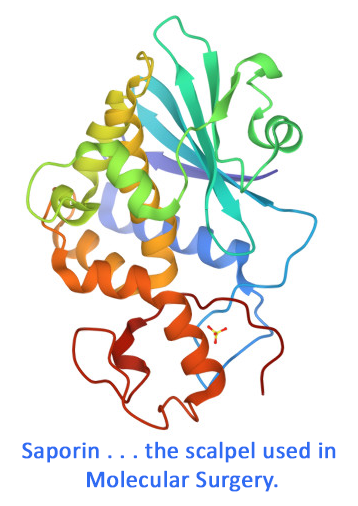
This targeted toxin recognizes cells that express human and rat cannabinoid receptor 1 (CB1). Anti-CB1-SAP is a bonded toxin between a biotinylated affinity-purified rabbit polyclonal antibody to cannabinoid receptor 1 (CB1) and the secondary conjugate Streptavidin-ZAP containing the ribosome-inactivating protein, saporin.

Anti-CB1-SAP is available individually (Cat. #IT-104) or as a kit (Cat. #KIT-104) which includes Anti-CB1-SAP and BIgG-SAP rabbit (Cat. #IT-75).

keywords: Cannabinoid receptor I, Antibody, CB1, CBr, Endocannabinoids, Psychoactive, GPCR, G protein-coupled, Marijuana. Saporin, Targeted Toxin, Appetite, Pain, Mood, Memory, SAP

Reviews

There are no reviews yet.

Be the first to review “Anti-CB1-SAP [IT-104, KIT-104]”

View Data Sheet

CB1 receptors on a subset of vagal afferent neurons modulate voluntary ethanol intake in mice

Herrerias A, Oliverio A, Dvorácskó S, Thyagarajan A, Chedester L, Liu J, Cinar R, Iyer MR, Kunos G, Godlewski G (2025) CB1 receptors on a subset of vagal afferent neurons modulate voluntary ethanol intake in mice. Mol Psychiatry doi: 10.1038/s41380-025-03266-9 PMID: 40975751

Objective: To investigate how peripheral CB1 receptors on vagal afferent neurons regulate voluntary ethanol intake and their role in gut-brain signaling underlying alcohol consumption.

Summary: Selective deletion or ablation of CB1R in nodose ganglion neurons abolished the inhibitory effects of peripheral CB1R antagonists on voluntary ethanol intake. The study identifies CB1R on Gpr65⁺ vagal sensory neurons as critical mediators of gut-brain communication regulating alcohol preference and intake.

Usage: Anti-CB1-SAP (IT-104) or Blank-SAP (IT-21) was injected into the proximity of the nodose ganglion at 250 ng/mL to selectively ablate CB1R-expressing vagal afferent neurons

Related Products: Anti-CB1-SAP (Cat. #IT-104), Blank-SAP (Cat. #IT-21)

browse all references for this product | back to top

BIgG-SAP Rabbit (Cat. #IT-75)

browse this product category | browse all products | back to top

browse all articles | back to top

browse all videos | back to top

Cytotoxicity Assay for Targeted Toxins in vitro

Concentration Calculation Explained: Convert molarity to mg/ml and mg/ml to molarity

Preparing and Interpreting Cytotoxicity Data in vitro

browse all protocols and calculators | back to top

Shopping Cart
Scroll to Top